What the song is about
"Yellow" is a tender and evocative song centred on unconditional love, devotion and admiration. The colour itself, while seemingly arbitrary in origin, has come to signify brightness, warmth and the radiant glow of the person being sung about.
Look at the stars, look how they shine for you
The lyrics express a deep and uncomplicated commitment. The narrator is willing to do anything for the object of their affection — to swim across, to jump across — and the "yellow" quality is what makes any sacrifice worthwhile. The song conveys awe at the loved one's presence, suggesting that their very being illuminates the world around them.
It is worth resisting the urge to decode the colour. Chris Martin has repeatedly said the word does not carry a specific deeper meaning beyond sounding right for the melody and the mood he was after. The song's emotional content is in the scale of what is being offered, not in a hidden symbolic key.
Where the word came from
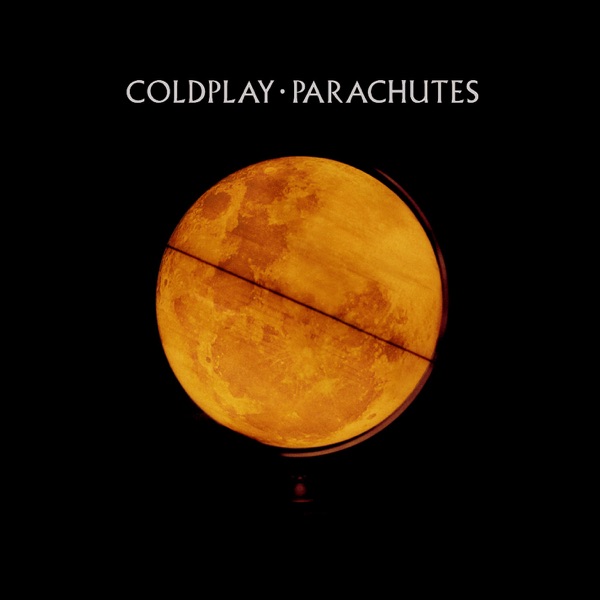
"Yellow" was released on 26 June 2000 as the second single from Coldplay's debut album Parachutes — though it was the lead single in the US. It became the band's breakthrough hit and substantially raised their international profile.
The song is credited to all four members: Chris Martin, Jonny Buckland, Guy Berryman and Will Champion. According to Martin, the melody and initial idea came to him one night outside Rockfield Studios in Wales, looking up at a sky that was unusually full of stars.
The word itself, by his account, came from spotting a Yellow Pages directory nearby while casting around for something that fitted the melody. He has consistently downplayed any deeper significance, emphasising that it was the sound and feel of the word that mattered.
The breakthrough
"Yellow" was a significant commercial success and played a crucial role in launching Coldplay internationally. In the United Kingdom it peaked at No. 4 on the UK Singles Chart, becoming their first Top 5 hit.
In the United States it reached No. 48 on the Billboard Hot 100 — a respectable showing for a new British alternative act. More significantly, it gained considerable airplay on alternative rock radio, which is what actually built their US audience. It also charted well in Australia and across Europe.
The song's success carried Parachutes to multi-platinum status in many countries, and the album won the Grammy for Best Alternative Music Album in 2002.
How it is built
"Yellow" is an alternative rock ballad characterised by a simple but effective melodic structure, a distinctive guitar figure, and Chris Martin's falsetto. The track opens with a memorable, slightly jangly guitar riff that forms the song's main instrumental hook.
As the song progresses, layers are gradually added: Guy Berryman's melodic bassline, Will Champion's drumming — which enters with a distinctive, slightly off-kilter beat before settling into something straighter — and Jonny Buckland's atmospheric electric swells. The song builds dynamically, moving from quieter verses to a more expansive chorus.
The production, by Ken Nelson with the band, is relatively unadorned, focusing on capturing an organic sound. It avoids excessive studio effects, allowing the natural warmth of the instruments and vocals through — which is a large part of why the record still sounds like four people in a room.
One take on a wet beach
The video, directed by James Frost and Alex Smith, is known for its striking simplicity. It was filmed at Studland Bay in Dorset, and features Chris Martin walking along a wet, windswept beach in a single continuous take, the sky lightening from pre-dawn gloom to morning as he sings.
Directed by James Frost and Alex Smith, 2000 — one continuous take at Studland Bay, Dorset.
The original concept was to feature the whole band in a sunny beach setting. Will Champion's mother's funeral fell on the planned shoot day, so only Martin was available, and the weather turned cold and wet. Both accidents are why the video looks the way it does — the melancholy that everyone reads into it was not designed.
The lyrics
The lyric is short, plain and heavily repeated. Its imagery is celestial — stars, skin turning into something beautiful — and its grammar is almost entirely declarative: a list of things the singer did and would do. There is no obstacle in the song and no story, which is unusual for a record this widely played.
That plainness is the reason it works at scale. A lyric with more specificity would be harder for a stadium to mean.