What the song is about
"Stan" is an exploration of the dark side of fandom, obsession and untreated mental illness. Through a fictional story told in letters, Eminem traces the extremes of idolisation and the consequences of feeling unheard. It works as both a cautionary tale and a commentary on what fame does to the people on the receiving end of it.
Dear Slim, I wrote you but you still ain't callin'
The opening line establishes the whole structure: a devoted fan writing to an idol who has not written back. Across three letters the tone shifts from admiration to grievance to something much worse, and the silence Stan is responding to is never malicious — it is simply the ordinary silence of someone who receives more mail than he can read.
The song's sharpest idea is that Stan has misread the source material. He takes the persona in Eminem's records as literal instruction and as a personal bond. The tragedy is a category error about what a song is, which is what makes the final verse land: Eminem's reply is warm, reasonable, and addressed to someone who can no longer read it.
How it was made
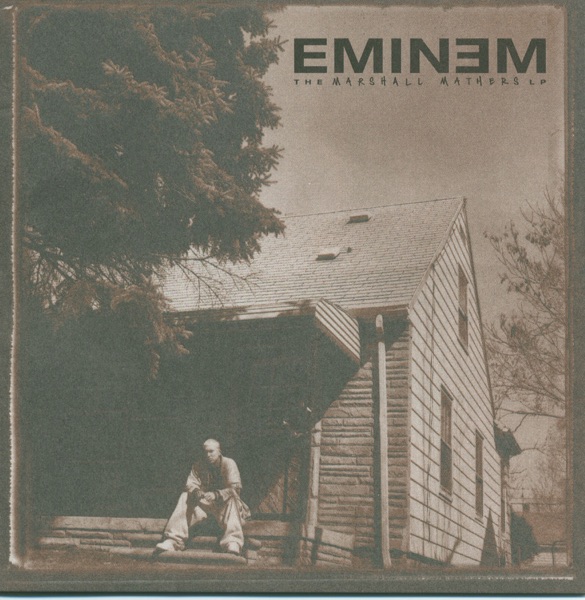
Released in 2000 on The Marshall Mathers LP, "Stan" pushed the boundaries of hip-hop storytelling. It featured the British singer Dido, sampling her song "Thank You" for a chorus that sits in deliberate contrast to the narrative.
The song was produced by The 45 King with co-production by Eminem. Its epistolary format — a story told through a sequence of letters — was a genuinely novel approach in popular music at the time, and it is the reason the song can hold six and a half minutes without a conventional hook structure.
"Stan" marked a significant moment for the genre, demonstrating hip-hop's capacity to handle serious psychological material with nuance. Its influence extended beyond music, prompting discussion about mental health, celebrity, and what public figures owe their audiences.
Reception and reach
"Stan" was both a commercial and critical success, reaching the top ten in multiple countries. In the UK it peaked at No. 1. It also charted highly in Australia, Canada, Germany, Ireland and across Europe.
It has been widely praised for its storytelling and structure, and is routinely cited as one of Eminem's greatest works and one of the best hip-hop songs ever recorded, appearing on numerous critics' lists including those compiled by Rolling Stone.
The collaboration also introduced Dido to a much wider audience; "Thank You" and her album No Angel both benefited substantially.
The Dido sample
The composition is inseparable from the storytelling. The track samples the chorus and a melancholic loop from Dido's "Thank You," and that sample — soothing, almost weightless — provides a backdrop that keeps refusing to match what is being described over it.
That contrast is the point. Dido's calm can be read as the ordinary world Stan wants to be admitted to, or as the detachment of the person he is writing to. Either reading amplifies the distance between them.
The structure is three verses from Stan and a final verse from Eminem. Each of Stan's verses escalates, mirrored by subtle changes in the production and delivery. Sound effects — a pencil scratching, thunder, rain, and eventually a car — do narrative work that the lyric does not have to spell out.
Eminem's vocal performance carries the shift, moving from Stan's increasingly unhinged register to his own measured, concerned tone in the last verse. The change in voice is what tells you the letter-writer has changed, before the words do.
Devon Sawa in the basement
The video, co-directed by Dr. Dre and Philip G. Atwell, dramatises the narrative directly, with Devon Sawa as Stan and Dido as his pregnant girlfriend.
Co-directed by Dr. Dre and Philip G. Atwell, 2000 — the long version, with Devon Sawa as Stan.
It depicts the escalating obsession, the neglect of his girlfriend, and the ending the song describes. It was praised for its unflinching treatment of the material, and a censored cut was generally what television aired.
A word enters the language
The term "stan", taken directly from the song, has since entered general use as a noun and a verb for an obsessive fan. It is now recorded in the Merriam-Webster Dictionary.
The drift in meaning is worth noting. In current usage "stan" is usually affectionate and self-applied — people describe themselves as stanning things they merely like a lot. The song it came from is about a man who kills himself and his girlfriend. Very little of that survives in the word.
The lyrics
The writing is precise about escalation. Each letter reveals more of Stan's deteriorating state, his misreadings of lyrics he has taken as personal address, and a need for acknowledgement that grows as it goes unmet. Details accumulate quietly — a tattoo, a basement, a younger brother — so that the ending is prepared rather than announced.
Eminem's final verse is deliberately anticlimactic: friendly, practical advice, offered far too late, ending in a recognition that arrives one beat after it could have helped.