The story the song tells
Most listeners remember the chorus and assume the song is about desire. It is really about a transaction, and the whole point sits in the verses.
The narrator is a woman travelling alone. She stops for a man on the road, takes him to a room for the night, and in the morning she is gone — no name, no number, nothing to trace her by. The reason arrives late: there is already a man in her life, one she loves and has no intention of leaving, and he cannot father a child. She has not gone looking for romance. She has gone looking for a father.
The last verse jumps forward several years. The two meet again by chance, and the stranger sees that she is not alone: there is a child with her, and the child looks like him. That is the reveal the song is built around, and it is what turns a chorus that sounds like seduction into something colder and much stranger.
It is worth being precise about what the song does and does not say, because it is often described loosely as a song about infidelity. The narrator is not choosing between two men and she expresses no guilt. She has made a decision and carried it out. What unsettles people is less the act than her composure about it — and the fact that the man she sleeps with is never asked, and never told.
It was a love song first
Heart did not write this. It was written by Robert John "Mutt" Lange, the producer behind AC/DC's Back in Black, Def Leppard's Hysteria and Foreigner's 4 — a songwriter with an unusually exact ear for what a rock radio chorus needed to do.
The song already existed before Heart got near it. Dobie Gray recorded a version in 1979, under the near-identical title "All I Want to Do Is Make Love to You" — and with a different lyric. In that version it is simply a love song. There is no hitchhiker, no infertile partner and no child. The narrative that makes the Heart recording notorious was written into it later; the hook survived, the story replaced.
That history is the answer to a question people often ask about the song, which is how a band led by two women came to record something so widely read as cynical about them. They didn't write it. It was brought to them, fully formed, as a hit.
Why Heart didn't want it
Ann Wilson has been unusually blunt about this song for more than thirty years. In an interview with Dan Rather she called its message "hideous". She has also said the band "had sworn off it because it kind of stood for everything we wanted to get away from" — the glossy, producer-driven, radio-shaped version of Heart that the 1980s had built around them, and at some distance from the band that made Dreamboat Annie.
They recorded it anyway. It was obviously a hit, and it was obvious to everyone in the room. That tension is audible in the performance: Wilson sings it enormously well and entirely straight, which is arguably what makes the story land at all. A knowing or winking vocal would have turned it into a novelty. She plays it as though the narrator means every word, because the narrator does.
What it did on the charts
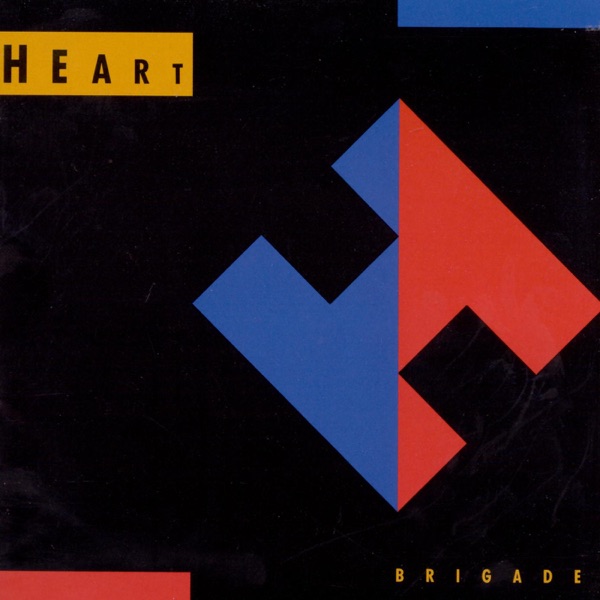
Released on 12 March 1990 as the lead single from Brigade, it became one of the biggest hits of Heart's career. It reached No. 2 on the Billboard Hot 100 and held there for two weeks; on the rival Cash Box Top 100 it went all the way to No. 1 in the week of 2 June 1990.
It topped the charts outright in Canada and Australia, reached No. 8 in the UK, No. 6 on Adult Contemporary and No. 2 on Mainstream Rock. The RIAA certified it Gold; it went Platinum in Australia and New Zealand, Gold in Canada and Silver in the UK.
The song was produced by Richie Zito, and its success is a fair measure of how completely Heart had crossed over by 1990 — a band that began as a hard rock act in Seattle scoring its biggest sales with a ballad written by an outside writer.
The music video
The official video keeps its distance from the plot. Rather than dramatising the motel room or the child, it stays largely with the band and with Ann Wilson delivering the vocal — which, given how literal a treatment of this lyric could have been, was probably the wise choice.
The official video, from Heart's VEVO channel.
The lyrics
The lyric is worth reading in full precisely because the twist is easy to miss on the radio: the chorus is loud and the explanation is quiet. The verses carry the plot, and the final one carries the reveal.